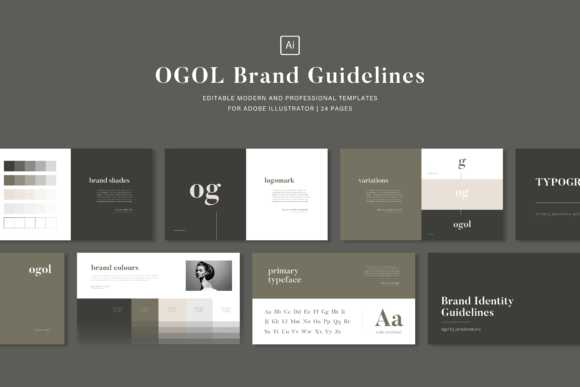
Streamline Your Design Process with OGOL Brand Guidelines
Establishing a cohesive brand identity is one of the most critical steps for any business, yet the process can often feel overwhelming and time-consuming. The OGOL Brand Guidelines Template offers a comprehensive solution, providing a structured framework that transforms the daunting task of brand creation into a manageable and efficient workflow. Designed with precision and versatility in mind, this template pack is built for professionals who value consistency and quality without starting from scratch every single time.
A Practical Toolkit for Modern Branding
At its core, the OGOL Brand Guidelines Template is a collection of 24 meticulously designed templates, all fully editable in Adobe Illustrator. The visual personality of the system is clean, contemporary, and professional, emphasizing clear white space and structured layouts that allow your content to breathe. This isn't just a set of pages; it's a visual language designed to present your brand's story with clarity and impact. The overall appeal lies in its balanced aesthetic—modern enough for tech startups and digital creators, yet timeless enough for established consultancies and boutique businesses.
The true value emerges in its practical application. For a designer, this template kit is a foundational asset. Instead of building a brand book from the ground up for each client, you can adapt the OGOL framework, ensuring every deliverable meets an industry-standard level of professionalism. For entrepreneurs and small business owners, it demystifies the branding process. The instructions are straightforward: change the colours, insert your own text and imagery, and adjust the copy. This approach empowers you to take control of your brand's visual direction, resulting in a polished identity system that builds trust and recognition.
Where This System Truly Shines
The applications for the OGOL Brand Guidelines extend far beyond a simple PDF document. Its 1920 x 1080 px resolution and digital mockup inclusions make it immediately ready for presentation in client pitches, internal team briefings, or investor meetings. Imagine walking into a meeting with a complete, visually engaging brand guideline displayed on screen—it sets a tone of preparedness and strategic thinking that static documents often miss.
This template excels in projects where consistency is non-negotiable. For a marketing team launching a new product, the included sections on brand colours, typography, and tone of imagery ensure that every social media graphic, web banner, and print advertisement aligns perfectly. The stationery kit templates allow you to mock up business cards, letterheads, and envelopes, giving you a tangible preview of your brand in the physical world. For content creators and bloggers, establishing these visual rules early on helps in creating a recognizable aesthetic across platforms, from YouTube thumbnails to Instagram Stories, fostering audience engagement through familiar visual cues.
Building Recognition Through Consistency
A brand is more than a logo; it's a cumulative experience. The OGOL template facilitates this by including dedicated sections for logo variations, clear white space guidelines, and incorrect usage examples. This "do's and do not's" feature is particularly valuable. It acts as a safeguard, preventing common misapplications that can dilute a brand's impact over time. When every team member or freelance contractor refers to the same set of rules, the risk of visual inconsistency drops dramatically.
The influence on brand perception is significant. A well-documented brand identity, presented through a tool like the OGOL guidelines, communicates professionalism and attention to detail. It tells clients and customers that you are serious about your business. This level of organization can streamline internal processes, reduce back-and-forth revisions with designers, and ensure that your brand's visual hierarchy—what elements are most important—is clearly communicated in every piece of collateral.
Integrating OGOL Into Your Workflow
Adopting this system is less about learning new software and more about organizing your brand's assets logically. Start by gathering your core elements: your primary and secondary logos, your established brand colour palette (hex codes, RGB, CMYK values), and your chosen typefaces. The OGOL template is designed to house this information, but its strength is in how it presents it. The typography sections, for instance, don't just list fonts; they demonstrate hierarchy, showing how a display font pairs with a body font for maximum readability in both digital and print contexts.
For those evaluating if this is the right fit, consider the scope of your projects. If you frequently develop brands for clients or are building a business with multiple sub-brands, the efficiency gains are substantial. The template’s structure guides you through essential sections you might otherwise overlook, such as defining brand values and mission statements, which are crucial for aligning your visual identity with your core message. While the templates are designed in Illustrator, the principles and layouts can inspire adaptations in other design software, though the native files offer the highest level of control and editability.
In essence, the OGOL Brand Guidelines Template is a catalyst for professionalism. It provides the structure, the visual framework, and the necessary components to document a brand identity thoroughly. By leveraging this resource, you move beyond ad-hoc design decisions and into a realm of strategic, consistent brand building that saves time, reduces costs, and elevates the perceived value of your work or your business.